

When shopping in a physical store, customers often walk away with things they didn’t plan to buy.
Someone picking up paper plates for a barbecue might remember they need plastic cutlery too. A shopper grabbing a gallon of ice cream might start browsing the toppings aisle and end up with hot fudge and chopped peanuts.
You get the idea—when people see all the options laid out in front of them, purchasing extra items is a no-brainer.
And here’s the kicker: even though they don’t have physical aisles for customers to browse, ecommerce stores can replicate this experience. It all starts with understanding what an attach rate is, how to measure it, and why it matters.
What is an attach rate?
Attach rate (or attachment rate) is a metric that measures how often customers add extra products to their main purchase. In other words, it shows the percentage of orders where a secondary item is sold alongside the primary item.
- Primary item: The main product a customer sets out to buy, such as a phone, a pair of shoes, or a bag of coffee beans
- Secondary item: An additional product added to complement the primary purchase, like a phone case, socks, or a coffee subscription
For example, if a shopper buys a laptop (primary item) and also adds a carrying case (secondary item), that’s counted toward the attach rate.
Attach rate provides insight into customer buying behavior and reveals how effective your product pairing or promotional strategies are. A high attach rate means your customers know what secondary products are available, understand their value, and believe they’re fairly priced.
Types of attach rate
When measuring attach rate, ecommerce businesses often focus on physical items. But you can also measure attach rate for services and subscriptions. Let’s take a closer look at several types of attach rate:
- Product attach rate tracks how often a complementary item is added to the main purchase.
- Extended warranty attach rate measures the percentage of orders where customers add coverage beyond the standard warranty.
- Purchase protection attach rate shows how often shoppers choose insurance or protection plans for issues like damage or theft.
- Subscription attach rate reflects the number of orders that include a recurring replenishment plan alongside the initial purchase.
What is a good attach rate?
A good attach rate in ecommerce depends heavily on the type of product you sell and the add-ons you offer. Rather than focusing on hitting the “right” number, we recommend tracking your own baseline for several months, then improving it over time using the strategies discussed later in this article.
How to calculate attach rate
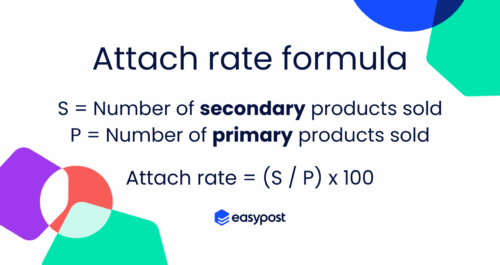
To calculate attach rate, divide the number of secondary products sold by the number of primary products sold, then multiply by 100 to get a percentage.
Attach rate examples
We’ll run through a few examples of the attach rate formula in action.
Example 1: An electronics store sells 1,000 phones in a month, and 250 of those orders also include a phone case. When we plug the numbers into our formula, we get (250 / 1,000) × 100, or 25%.
Example 2: An apparel store sells 800 pairs of jeans in a month, and 120 of those orders also include a belt. Dividing 120 by 800 and multiplying by 100 gives an attach rate of 15%.
Example 3: A coffee subscription brand sells 500 bags of coffee beans in a month, and 50 customers sign up for a refill subscription at the same time. That works out to an attach rate of 10%.
Why attach rate matters for your business
Why measure attach rate? There are three important reasons.
1. Helps you gauge your company’s health
Your attach rate reflects how well your marketing, sales, product design, and pricing strategies are working together. If customers consistently add accessories or upgrades, your product bundles make sense and your pricing strategy is convincing.
On the other hand, a weak attach rate might point to gaps, like unclear messaging or products that don’t naturally pair well together.
2. Reveals revenue-generating opportunities
It’s a core truth of ecommerce marketing: retaining customers is cheaper than acquiring new ones.
Similarly, increasing your average order value is more effective than trying to drum up more sales, since you’re already dealing with shoppers who plan on making a purchase.
Attach rate helps you discover opportunities to increase your average order value. Rather than simply tracking which products are being sold, you’ll be able to see which are being sold together. Once you know which combinations resonate with buyers, you can emphasize those combinations on product or checkout pages to convince others to add complementary items to their carts.
3. Sheds light on customer satisfaction
When customers willingly add protection plans, subscriptions, or complementary items, it signals they trust your products and see added value in your recommendations. If attach rates are low, you’ll know you need to revisit your offerings or customer experience.
How to increase your attach rate
Fortunately, improving your attach rate isn’t complicated. Like any ecommerce website optimization project, it simply requires experimentation, testing, and time. This section will share four strategies to get started, along with examples from two successful online retailers.
1. Bring awareness to secondary products
When it comes to secondary products, placement is key! After all, customers can’t add what they don’t see. You can recommend secondary products on product and checkout pages using labels like “Frequently bought together,” “You might also like,” or anything else that fits your brand voice and catches shoppers’ attention.
If your secondary product is an extended warranty or purchase protection, try adding a small graphic that shoppers can click to learn more about the service’s benefits.
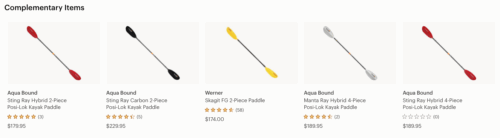
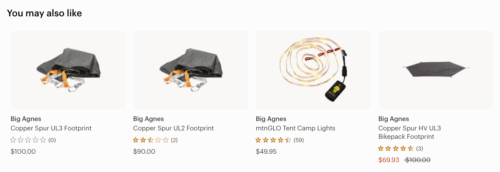
Example: On an REI product page for a kayak, they include a “Complementary Items” carousel featuring different paddles, and the product page for a tent has a “You may also like” section with various tent accessories.
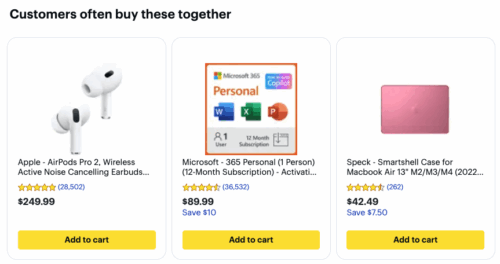
Example: On the Best Buy checkout page for a MacBook, shoppers can learn more about AppleCare+ protection services and choose a three- or four-year plan. The page also includes a “Customers often buy these together” section with products like AirPods, a Microsoft subscription, and a laptop case.
2. Highlight the value of secondary products
It’s not enough to just display secondary items—it needs to be crystal clear why they matter. By clearly connecting the add-on to the customer’s main purchase, you’re giving them a practical reason to spend a little more.
3. Offer discounts for bundles
Bundling creates a simple incentive: buy more and save. A customer deciding between just a laptop or a laptop-plus-case bundle might be swayed if the case comes at a discounted price when paired together.
This approach not only improves the attach rate but also gives customers the feeling of getting more bang for their buck.
Example: The Best Buy checkout page for a laptop offers a discount subscription to Microsoft Word, Excel, and PowerPoint.

4. Make the process seamless
If adding a secondary item feels like extra work—too many clicks, unclear pricing, or hidden shipping costs—customers will skip it. Make the process smooth to boost attach rates without changing the products themselves.
Watch out for these common pitfalls
When working to improve your attach rate, you’ll want to watch out for a few common pitfalls.
First, some businesses push add-ons too aggressively, which can frustrate customers and even hurt conversions. To avoid this, use cross-selling strategically (and sparingly) so your recommendations feel helpful rather than pushy.
Another frequent issue is inaccurate tracking. If you don’t clearly define what counts as a primary versus a secondary product, or if your data system doesn’t capture add-ons correctly, your attach rate numbers can be misleading. For a clear view of your attach rate over time, dig into your tracking systems and make sure products are properly categorized.
Package protection: A great secondary product
As mentioned earlier, attach rate doesn’t just apply to physical products. You can—and should—offer other services to improve the customer experience, and measuring the attach rate is the best way to see how much customers value these add-ons.
One of the services we recommend for every ecommerce business? Package protection.
Package protection tools like Norton Shopping Guarantee allow customers to add protection for a small fee, insuring their package against loss, theft, and damage.
To make things easy for merchants, Norton Shopping Guarantee is optimized for a high attach rate. Trust badges on key pages signal that a website is valid, and shoppers can click to learn what they’re getting with package protection. The results speak for themselves—over 50% of shoppers opt in.
With Norton Shopping guarantee, packages are protected, customers get peace of mind, and your business avoids claim-filing hassles. It’s truly a win-win!
Start protecting packages for free
Norton Shopping Guarantee lets customers opt in for comprehensive package protection, saving your business time and money.