
Your small ecommerce business has experienced explosive growth in the past few years—and now you’re not so sure whether it’s still a “small” (or even mid-size) business at all. But you’ve definitely noticed that the SMB shipping software you’ve been using hasn’t been scaling as smoothly as you’d like.
Does this story sound familiar? If so, you might be ready to upgrade to an enterprise-level shipping solution.
That’s exactly what Joe Dieter and Lori Boyer focused on in a recent Unboxing Logistics episode. They discussed the definition of an enterprise shipper, delved into the complexities of enterprise-level shipping, and shared how EasyPost Enterprise simplifies things.
We’ve pulled some key moments directly from the episode; quotations have been lightly edited for concision and clarity.
What is an enterprise shipper?
Lori kicks off the conversation with a simple question: How do you define an enterprise shipper?
Joe’s answer: It’s not necessarily about volume.
He says, “When people think of enterprise shipping, they assume enterprise shipping or enterprise shipping software is reserved for someone doing a lot of volume, let’s say a minimum of several million shipments a year.”
“But the reality today is that volume is just one component. What we [at EasyPost] have observed is enterprise-grade complexity.”
7 signs you’re facing enterprise-grade shipping complexity
Naturally, Lori’s next question is, “What does [that] look like in the real world?” To answer, Joe shares the following signs that a business is facing enterprise-grade complexity.
1. You’re bringing in automation—and your current shipping software can’t keep up
Joe describes a common moment for growing companies: the realization that their current processes aren’t cutting it anymore.
“They come to [EasyPost] and say, ‘Hey, we woke up one day and realized we’re on a very old system. And we learned this as we tried to expand our warehouse network, or as we added another distribution center. We’re upgrading how we pick, pack, and ship—kind of the main moments within the warehouse journey. … One big thing that’s become clear is that our current shipping software is outdated.’”
2. Time to label is too slow
Another big pain point as companies scale is label creation taking too long.
Joe defines time to label as “how quickly a packed order can have a shipping label generated and applied with all the forms and documentation applied, and be ready for carrier pickup.”
For high-volume enterprise shippers, Joe recommends a time to label of less than three seconds, while mid-market businesses often aim for three to five seconds.
3. You need to add more carriers for specific shipping scenarios
As businesses grow, they tend to diversify their offerings, whether that’s adding new products, shipping to new countries, or offering faster delivery options. And it doesn’t take long to realize that they can’t make things work with just one or two carriers.
When these shippers talk to someone from EasyPost, Joe explains, they often say something like this: “We need to add more carriers ASAP—like, yesterday—but we’re realizing how challenging that is with the current tool we use. We’re shipping a new type of product to a different part of the globe, and we need to work with a new type of carrier.”
Another scenario might look like this: “We’re starting to ship more and more perishable goods. We’re shipping items that have to be kept in a certain environment, at a specific temperature, and they’re time-sensitive. They have to get from one point to another within a set window, or the goods are lost or damaged.”
If your own team has been having these conversations, you’re likely experiencing enterprise-grade shipping complexity.
4. Support costs are piling up
Carrier concerns aren’t the only thing plaguing high-complexity shippers. Joe points out that while rising rates are definitely causing headaches, support costs can also take a huge toll on budgets.
He’s heard the same story from countless businesses: “We need a lot of support. Every time we have to make one small adjustment to how we ship, we have to adjust our shipping software, and we can’t do that ourselves.”
“So we call our shipping software vendor’s support line, sit in a queue, and then start getting surprise invoices when they say, “Yes, we can address that for you. We can make that modification to your software. It’s going to take X number of months, and it’s going to require a lot of what we call professional service hours.”
Joe explains that this hurts businesses for two main reasons. Not only do they lose time waiting on a fix, but they’re also paying a premium for the service.
A better approach? Using a shipping platform with 24/7 support—one that doesn’t nickel and dime.
5. Your business is growing rapidly
While volume alone doesn’t define an enterprise, it does play a role, especially when you’re growing rapidly.
Joe knows that people are generally ready for an enterprise-level shipping solution when they say, “Our tools are very hard to maintain. Every peak season, we hit a new level of growth. We’re scaling, we’re growing, and it’s exciting, but our shipping software is never quite ready for that level of scale.”
6. Seamless tool integration is a must
According to Joe, the following scenario is all too common:
“We’re at a point where all the key tools in our order fulfillment and supply chain journey have to be talking the same language. For example, as orders come through our order management system, it has to seamlessly integrate with our warehouse management system, which then has to integrate with our ERP.”
“We’ve put multiple sophisticated, expensive tools in place to streamline our supply chain, but they don’t seem to speak the same language.”
While younger companies can often get by with disjointed tech stacks, enterprises need seamless integrations across all their logistics solutions.
7. Manual processes cause bottlenecks
When manual processes start slowing fulfillment down—or even bring it to a complete halt—it’s time to find a new solution.
Joe uses the hypothetical example of Susan, the only person in a warehouse who knows how to process certain shipments.
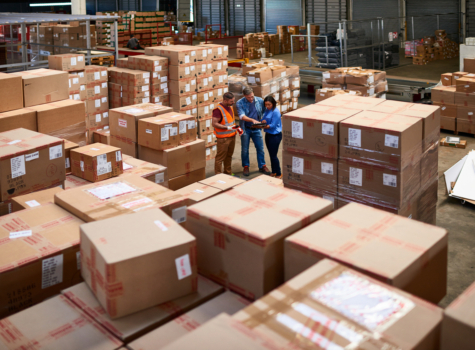
He says, “You could walk into an incredibly sophisticated Fortune 2000 brand, one of the biggest companies in the world, go into one of their main warehouses, see a huge pile of boxes in the corner, and ask, ‘What are those boxes doing there?’ The reply? ‘Oh, those are Susan’s boxes.’”
When you ask more questions, you might learn that “Susan is the only one who knows the exact labels, forms, documentation, and precisely how those boxes have to be packed because they’re going to a special location. And by the way, they only get picked up on the second Wednesday of every other month.”
Joe continues, “You’d be surprised how many of the largest, most sophisticated brands in the world are running warehouse systems where there’s a Susan who is the single point of dependency for whether they can fulfill orders on time.”
Tackle enterprise-grade complexity with EasyPost Enterprise
EasyPost Enterprise is a shipping platform for businesses facing enterprise-grade complexities.
Its features include:
- High-volume shipping. EasyPost Enterprise can process 500,000 or more shipments per hour without slowing down.
- Configurable business rules. Automated rate shopping and carrier selection rules remove the need for manual decision-making, ensuring the right carrier and service level are chosen for every package.
- AI-powered shipping insights and automation. Luma AI’s dashboards provide visibility into cost per package, transit times, exceptions, and accessorial fees, while forward-looking recommendations help you adjust carrier and service choices before issues affect performance.
- Low-code functionality. Low-code tools make it easy to modify workflows, rules, and configurations internally—no need to spend months waiting for every update.
- Multi-carrier automation. EasyPost Enterprise’s multi-carrier support makes it easier to activate, test, and optimize a diverse carrier mix, including regional and last-mile providers.
- Label and forms automation. Automated label generation and documentation handling reduce errors and support compliance requirements. Customizable, branded labels and standardized forms keep operations consistent across facilities.
- Branded tracking. Advanced Tracking is now available in EasyPost Enterprise, bringing access to branded email and SMS tracking notifications and centralized tracking data.
- Top-tier support. Joe says it perfectly: “If you are an enterprise-grade shipper, support becomes everything.” That’s why EasyPost provides 24/7 support, with teams available 24/7 to help with implementation, configuration, and complex shipping scenarios.
Simplify your shipping today
Whether you need a faster way to add carriers or print labels, a more integrated logistics tech stack, or better support (without the nickel and diming), EasyPost Enterprise can help.