
Warehouse automation isn’t a future-state discussion anymore. Labor constraints, rising order volumes, and customer delivery expectations are pushing fulfillment teams to rethink how their distribution centers operate today.
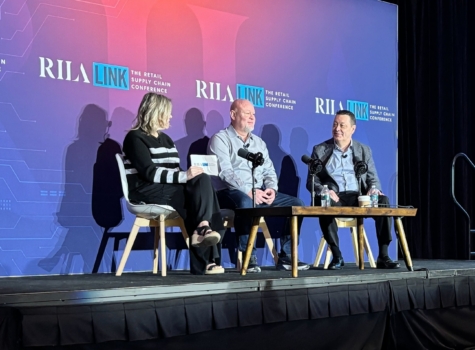
This reality framed a recent session at RILA LINK 2026, where industry professionals discussed what it actually takes to modernize a warehouse.
The session, moderated by Lori Boyer from EasyPost, brought together two supply chain leaders who led a multi-year automation initiative inside an active distribution center: Scott Davis from JD Finish Line and John Naylor from TREW.
In this article, we break down Scott and John’s insights on defining goals, executing the transformation, getting employee buy-in, and more.
Note: Quotations have been lightly edited for clarity and concision.
The project
John and Scott worked together to transform a manual distribution center into a highly automated facility while maintaining continuous operations. To be successful, they needed to keep packages moving, keep customers happy, and turn the distribution center into an efficient, future-proofed facility.
Let’s take a look at how they accomplished all three goals.
Defining the goal before choosing the technology
Before a single conveyor or shuttle was selected, the team spent time defining what success actually meant. For Scott, that meant starting with design criteria instead of equipment specs.
“My role in the program was really to establish what our design criteria was before we even got started,” he explained. “What are we trying to accomplish, and what partnerships do we need to bring to the table?”
This approach matters for mid-size ecommerce businesses because warehouse automation decisions often fail when they begin with tools rather than outcomes.
Instead of asking what technology is available, the team asked questions like:
- How much volume growth do we expect in three and five years?
- Which processes are slowing us down today?
- Where does labor availability create risk?
- What can’t be disrupted during the transition?
The answers shaped every decision, from layout to software integration.
Modernizing without shutting down operations
The facility in question wasn’t a greenfield. Orders were shipping daily, and customer promises still had to be met—and that made things complicated.
In John’s words, it was like performing “open heart surgery as you’re walking down the street.”
Automation was introduced alongside existing manual processes, which added complexity but reduced risk. During peak periods, the team intentionally routed certain volumes through manual workflows to protect service levels.
The lesson here is clear: a phased rollout often beats an all-at-once go-live.
Preserving a human-centered environment
The automation project wasn’t about replacing human workers. In fact, getting the facility’s employees on board was vital to the transformation’s success.
Labor impact without workforce disruption
Automation discussions inevitably raise concerns about headcount. In this case, the strategy wasn’t about eliminating people, but about allowing for growth without constant hiring.
While Scott and John worked, hiring was intentionally paced to avoid overstaffing roles that would later be automated.
Then, as volume grew, automation absorbed the incremental demand.
Buy-in starts with honesty and inclusion
Change management became one of the most decisive factors in the project’s success. Rather than replacing or sidelining the workforce, Scott and John brought them into the process early and often.
“The first thing is honesty,” Scott noted. “These things are complex, so you have to bring some excitement when you’re discussing them. You teach them early and often and then engage them frequently.”
John echoed that sentiment after observing the floor teams during early visits.
“When the operational staff knows that change is coming, it creates a lot of anxiety,” he said. “But there was already a sense of pride in the building. The first response from anybody on the floor was, what can I do to help?”
Choosing technology through process math, not hype
Technology selection followed a disciplined path. After mapping every process in detail, the team evaluated automation options using ROI, flexibility, and risk tolerance.
“It really becomes a fairly simple, black-and-white math exercise,” John said. “Do we invest the money, and what is the payback on that?”
Two additional filters mattered just as much:
- Future-proofing ensured the system could adapt to acquisitions or channel shifts.
- Risk assessment ensured the technology matched the organization’s appetite for operational change.
Notably, some areas were intentionally left manual.
“Every little area had to have an ROI, otherwise you leave it manual,” explained John. “That process allowed us not to over-automate an area.”
Planning for problems before they happen
Unexpected issues did arise, including electrical challenges in a building not originally designed for high automation loads. What prevented those issues from derailing the project was contingency planning.
“You have to have contingency dollars,” Scott said. “Do you want to go back in a year and ask for more or fight the battle up front so you can stay within your budgets?”
For businesses wanting to automate their own warehouses, the takeaway is straightforward.
To react fast to disruptions, you’ll need to build financial, timeline, and operational buffers into your plan.
Results that showed up on the floor
The most surprising outcome of the project was how quickly teams adapted to the new environment. Operators who once worked entirely manually became fluent in automated workflows.
“They didn’t even use computer screens before,” Scott noted. “The way they adopted things and became experts accelerated the timeline.”
Productivity gains followed quickly, driven not just by automation but by improved process design. Embedding operators during the build phase meant fewer learning curves at go-live and more consistent performance afterward.
The key to a fulfillment operation that keeps up
Throughout the session, John and Scott made it clear that modernizing a warehouse is complex, even messy at times. But thankfully, you don’t need to be perfect to achieve your automation aims.
All you need is clarity, patience, and respect for the people doing the work.
Improve your shipping without added complexity
The foundation of every automated warehouse is a shipping platform that powers carrier integrations, label selection and generation, rate optimization, and more. If your goal is reliable, cost-effective shipping, EasyPost can help you get there.